




1. Introduction: The Innovation of Active Outdoor Gear and Wearable Robotics in Australia
Modern outdoor exploration is undergoing a fundamental technological shift. For decades, hikers, trail runners, and adventurers have relied on static gear—such as carbon-fiber trekking poles, compression wear, and rigid knee braces—to manage physical output across demanding landscapes. While these traditional tools offer passive support, they cannot adapt to dynamic changes in terrain, body posture, or real-time cadence. Enter the active exoskeleton: a new category of wearable robotics engineered to actively interface with human movement.
Australia’s vast and rugged topography presents unique challenges for outdoor enthusiasts. From steep inclines in the Blue Mountains and technical bushwalking trails in Victoria to exposed Outback terrain, managing physical exertion is central to long-distance endurance. The Addmotor exoskeleton platform addresses these demands by introducing advanced bionic augmentation designed for high-intensity environments. As the flagship model of the series, the Cybergen Cadens Exoskeleton merges structural bionics with intelligence, establishing a new standard for consumer-grade outdoor exoskeletons. Built as an AI Powered Exoskeleton, the Cadens model bridges the gap between mechanical output and human intent, enabling adventurers to explore further with precision-engineered assistance.
2. Biomechanical Engineering: S-Curve Bionic Architecture & Force Transfer
At the core of the Cybergen Cadens Exoskeleton lies a deep integration with human biomechanics. Rather than acting as an external framework that imposes rigid movement patterns, the system is structured around an S-Curve Bionic Leg Bar architecture. This ergonomic contour closely mirrors the natural anatomical alignment of the human femur, hip axis, and knee articulation, ensuring that mechanical torque is applied along the body’s natural rotational axes.
Biomechanical Alignment & Load Sharing Pathway
• Human Hip Joint Alignment: Anchors the structural foundation along the natural rotational axis.
• S-Curve Bionic Frame: Mirrors anatomical femur contours to prevent joint restriction.
• Multi-Axis Actuation Torque: Delivers proportional mechanical force directly aligned with natural motion.
• Assisted Biomechanical Output: Supports lower-body extension while preserving natural gait fluidities.
The primary function of this bionic architecture is mechanical load redistribution. During lower-body extension—such as pushing off during a steep trail ascent or taking a high-cadence running stride—the frame absorbs a portion of the reactive ground forces. By transferring these forces through high-tensile structural pathways, the strength exoskeleton system supports lower-body movement during both knee extension and hip flexion. Crucially, this mechanical transfer occurs without altering natural gait mechanics, stride frequency, allowing users to maintain their natural movement patterns while benefiting from an active exoskeleton framework.
3. Real-Time Gait AI Analysis: Millisecond Algorithmic Precision
Power must be delivered at the exact millisecond human motion occurs. The Cybergen Cadens utilizes an advanced Micro-Gait AI Motion Engine paired with a high-density sensor array. Built-in Multi-Axis Inertial Measurement Units (IMUs) sample joint angle changes, angular velocity, and movement acceleration hundreds of times per second.
Real-Time Data Processing Loop
1. Multi-Axis IMU Sensors: Samples cadence, acceleration, and joint angular velocity.
2. AI Motion Engine: Analyzes stride dynamics and predicts movement intent in real time.
3. Dual Motors (1000W Peak): Executes millisecond actuation to deliver seamless push-pull assistance.
Through real-time data sampling, the AI Exoskeleton analyzes stride dynamics to predict movement intent before mechanical lag can take place. If a runner increases cadence or a hiker steps onto a steep incline, the algorithmic engine calculates the required torque curve instantly. The dual-motor system then actuates with millisecond precision, delivering push-pull force vectors that match the user’s exact step phase. This synchrony eliminates unnatural force spikes or mechanical resistance, allowing the AI Powered Exoskeleton to feel like a natural extension of the body during high-intensity trail workouts.
4. Powertrain & Hardware Architecture: Dual Motors, Battery, & Materials
The mechanical performance of the Cybergen Cadens Exoskeleton is powered by a high-output powertrain and an aerospace-grade frame:
|
Hardware Parameter |
Technical Specification |
|
Dual-Motor Drive System |
Twin high-torque motors producing 1000W peak power and 40 N·m max torque |
|
Max Assist Ratio |
Up to 45% assist ratio during active leg extension and forward strides |
|
Frame Metallurgy |
Aerospace-grade magnesium alloy (Lightweight Exoskeleton at 2.0 kg / 4.4 lbs) |
|
Battery System |
Dual 3,000 mAh hot-swappable batteries providing up to 24 km (15 miles) range |
|
Protection Rating |
IP54 water and dust resistance, operational down to -20°C |
5. Cadens Sport Modes & App-Calibrated Dynamics
To accommodate diverse outdoor activities, the Cybergen Cadens features specialized operational modes accessible via the physical control interface and the Addmotor App:
Through the companion app, users can calibrate independent torque output for each leg to accommodate asymmetrical power output or individual preferences.
|
Operating Mode |
Functional Mechanics & Application |
|
Smart Adaptive Mode |
Continuously processes sensor telemetry to adjust assist levels dynamically based on slope incline, movement speed, and ground resistance—ideal for mountain climbing and variable terrain. |
|
Fitness Resistance Mode |
Reverses motor actuation to apply opposing mechanical resistance against leg movement, transforming the device into a mobile training framework for athletic conditioning. |
6. Real-World Applications Across Australian Scenarios
The versatility of the Cybergen Cadens makes it suitable for a wide range of outdoor environments across Australia:
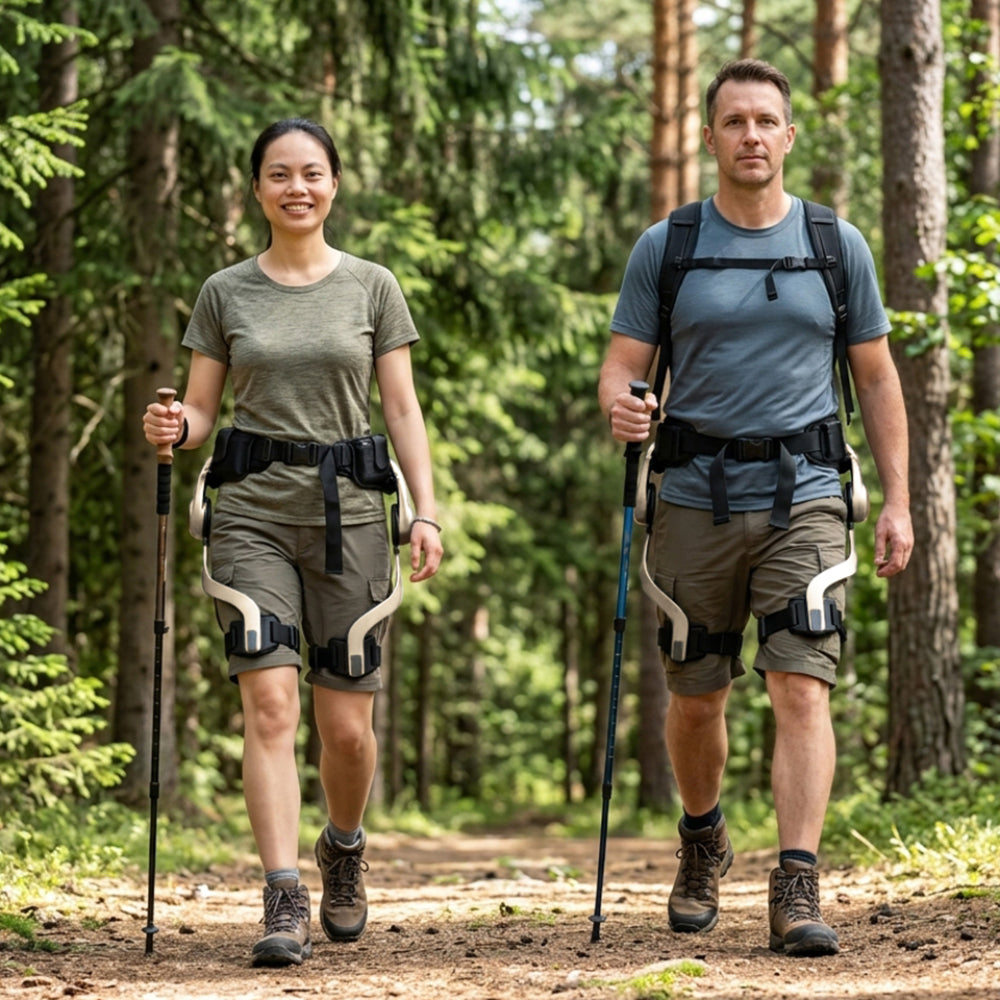
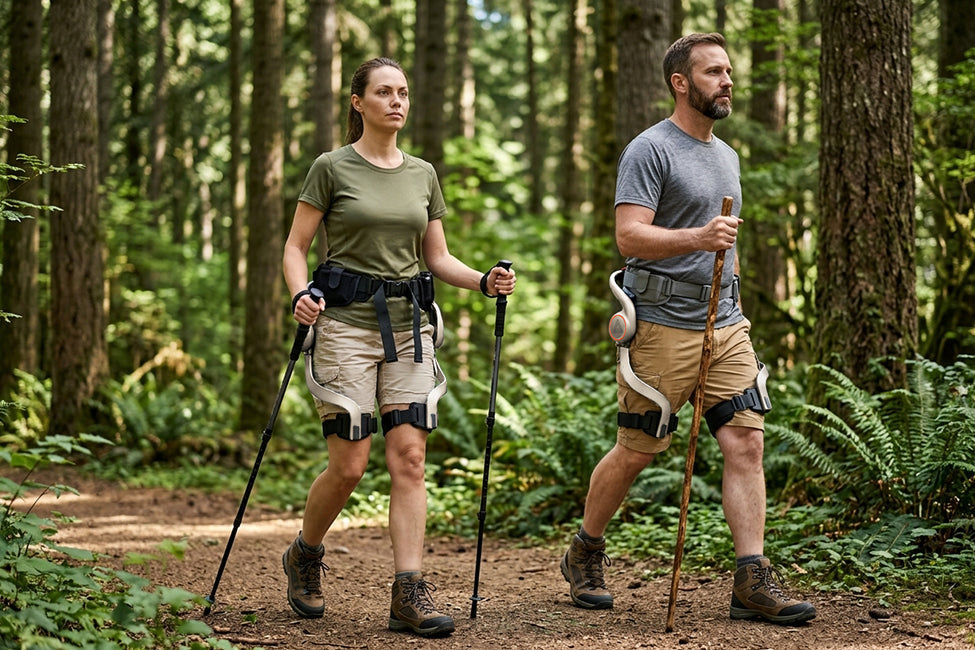
• Mountain Hiking & Bushwalking: Serving as an advanced hiking exoskeleton, the Cadens assists leg movement over loose gravel, granite steps, and steep incline ascents across national parks like the Grampians or Blue Mountains.
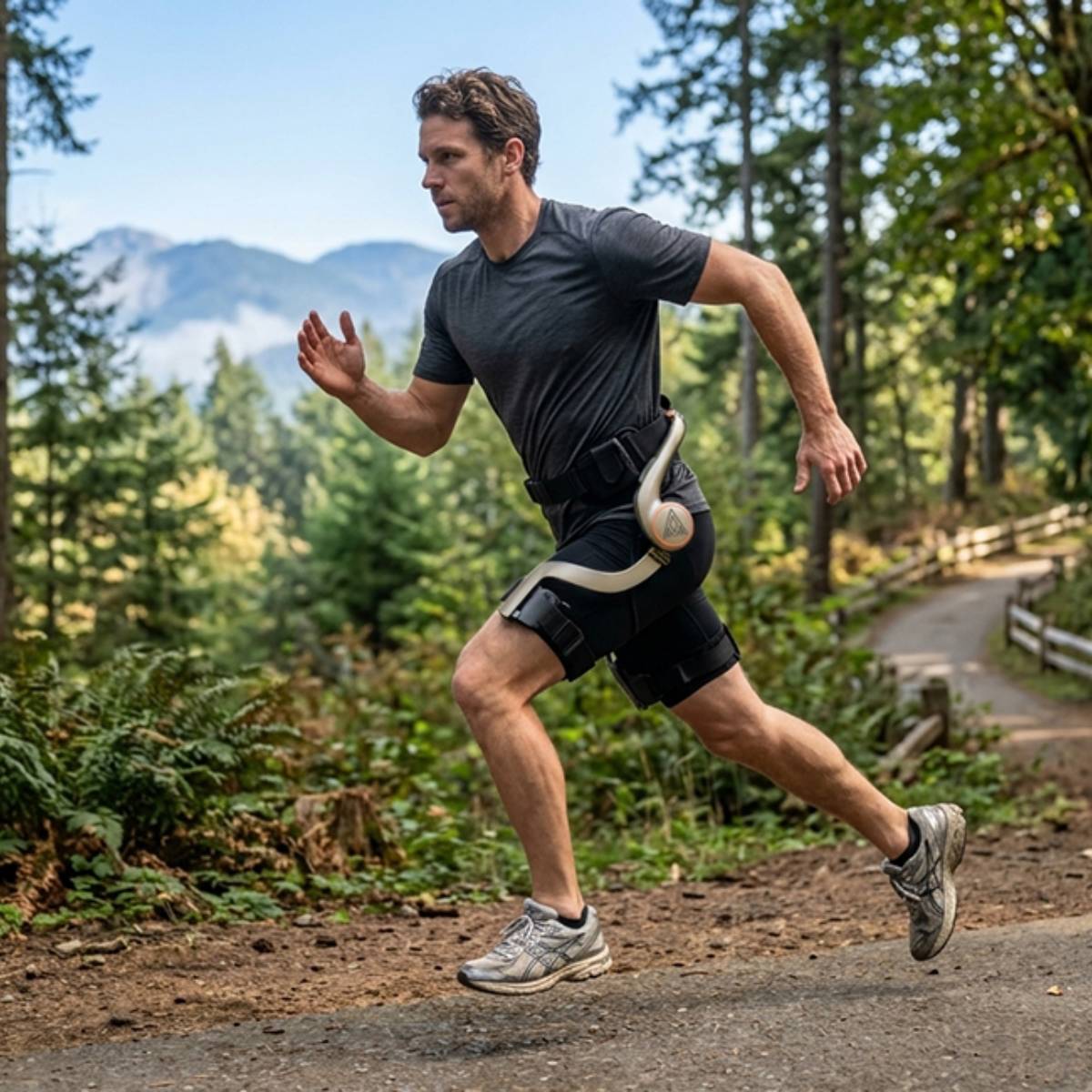
• Running & Cadence Management: Configured as a running exoskeleton, the system delivers fast torque response times to assist stride frequency and momentum during high-cadence trail runs.
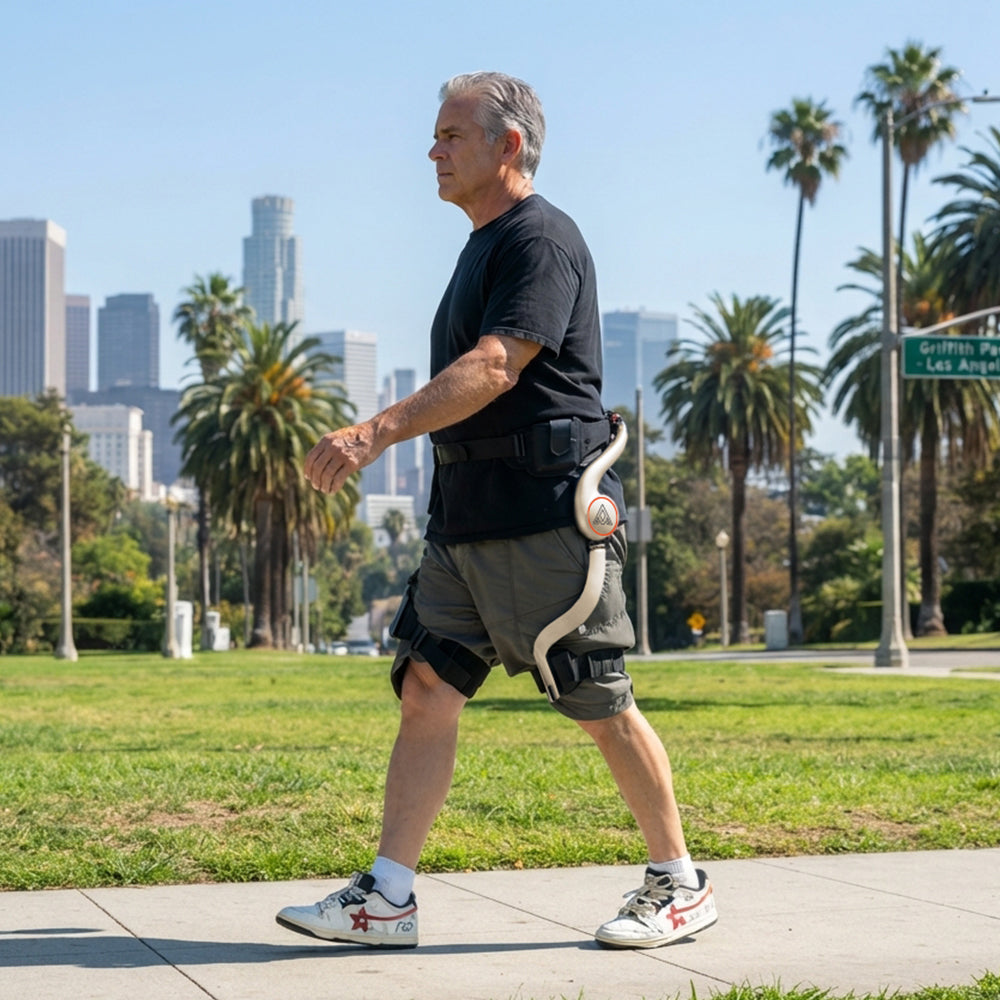
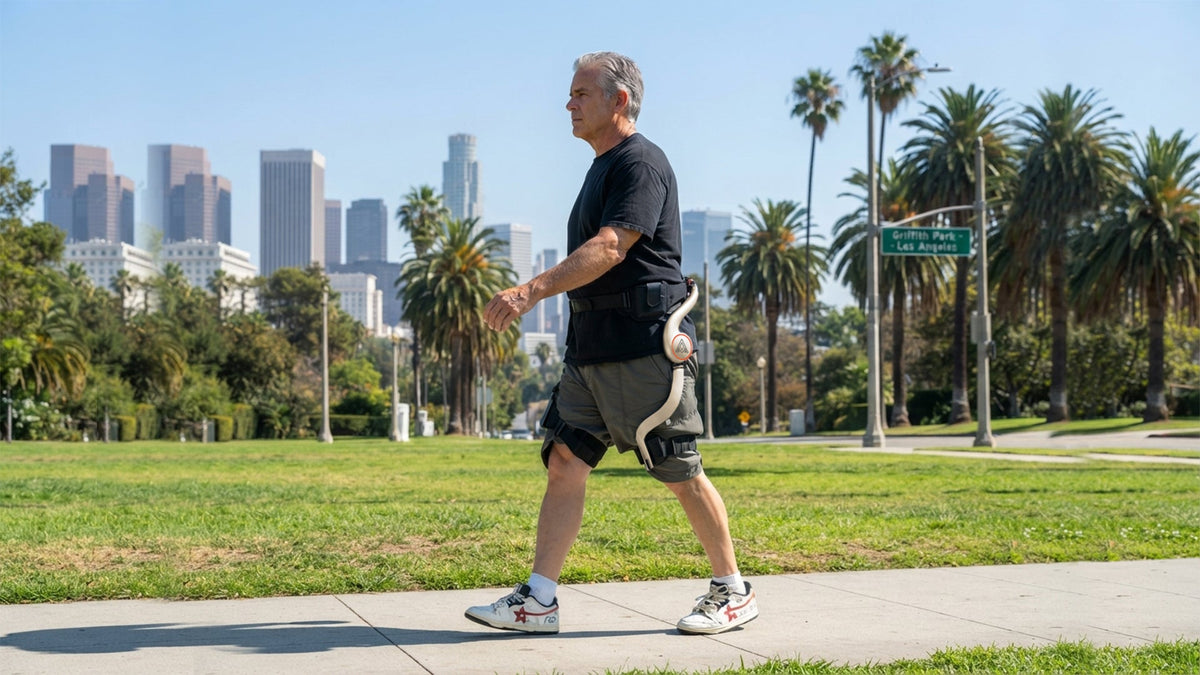
• Long-Distance Endurance Trekking: Functioning as a high-efficiency walking exoskeleton, it provides smart assist ratios over long-distance backcountry routes, allowing adventurers to cover extended distances with greater mechanical efficiency.
7. Conclusion: Pioneering High-Performance Outdoor Mobility in Australia
The Addmotor Cybergen Cadens Exoskeleton represents a major advancement in personal mobility and wearable robotics. By combining aerospace magnesium metallurgy, high-torque dual-motor propulsion, and millisecond AI gait analysis, it delivers active bionic support tailored for demanding environments. For Australian hikers, runners, and bushwalkers looking to push their physical boundaries, the Cadens offers a high-performance framework designed for the future of outdoor exploration.
To explore full technical specifications, app integrations, and regional availability, visit addmotor.com.au.

Leave a comment
This site is protected by hCaptcha and the hCaptcha Privacy Policy and Terms of Service apply.