



Why Traditional Training Tools Hit a Ceiling Outdoors
Australia is a runner's continent, but not an easy one. The Grand Cliff Top Walk in the Blue Mountains strings together 20.9 kilometres and 865 metres of ascent, and the Larapinta Trail throws steep ridgelines and exposed heat at anyone who ventures past the trailhead. What makes Australian outdoor fitness hard is rarely altitude. It is distance, terrain variability, and the persistence required to keep moving when the ground shifts underfoot.
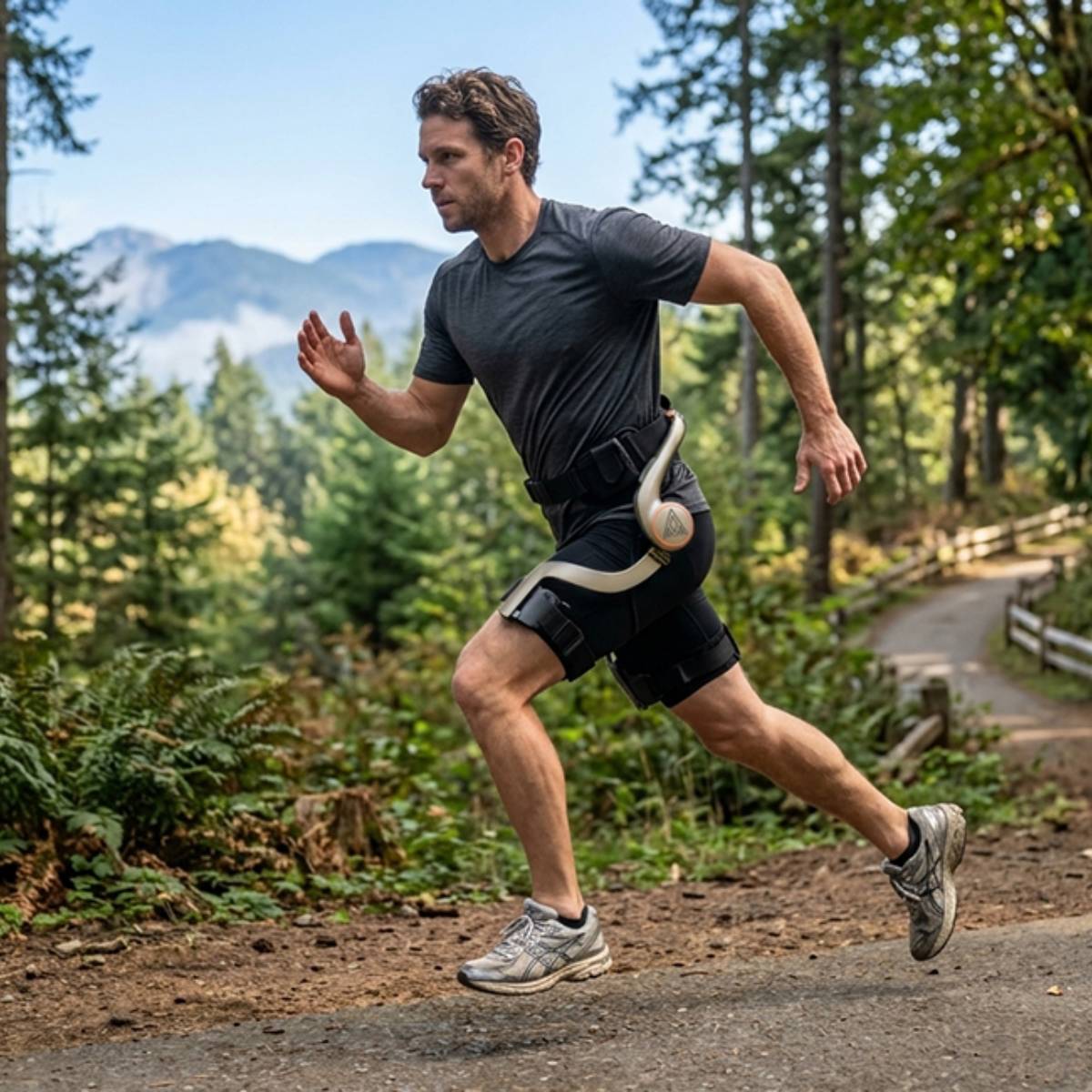
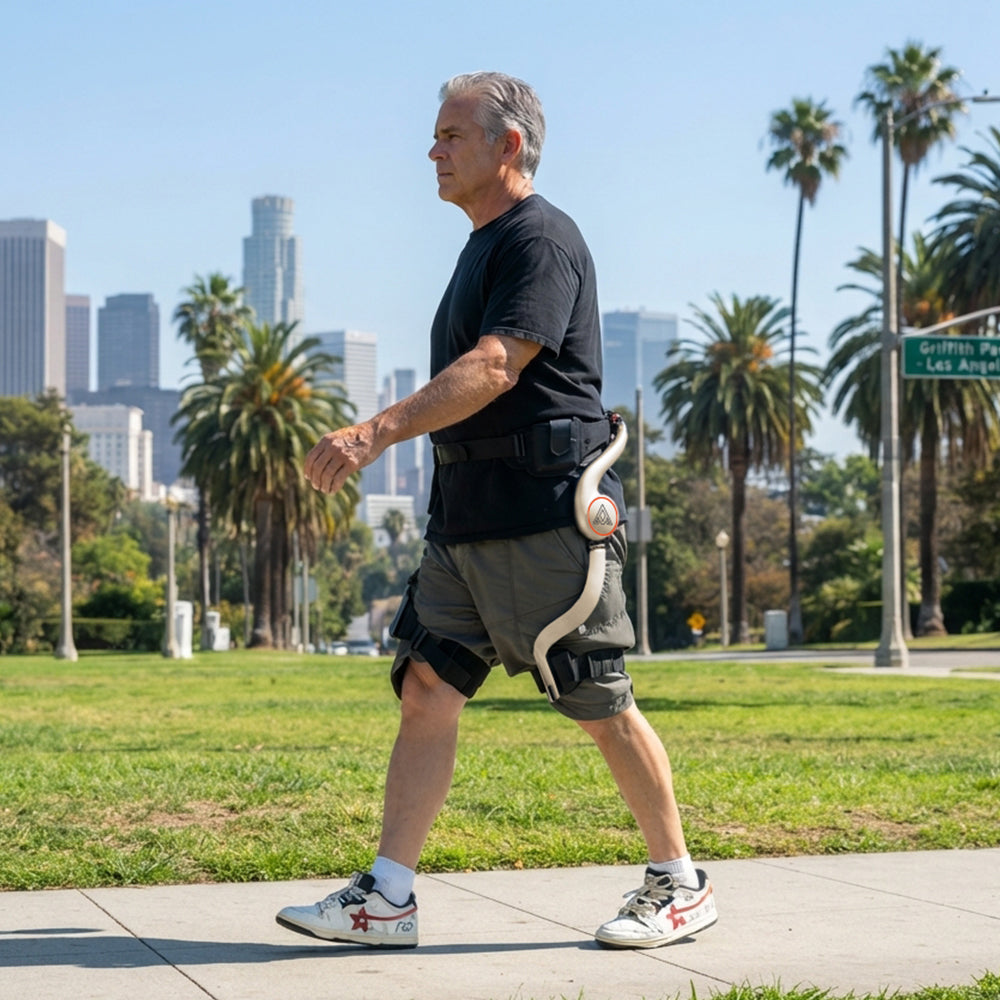
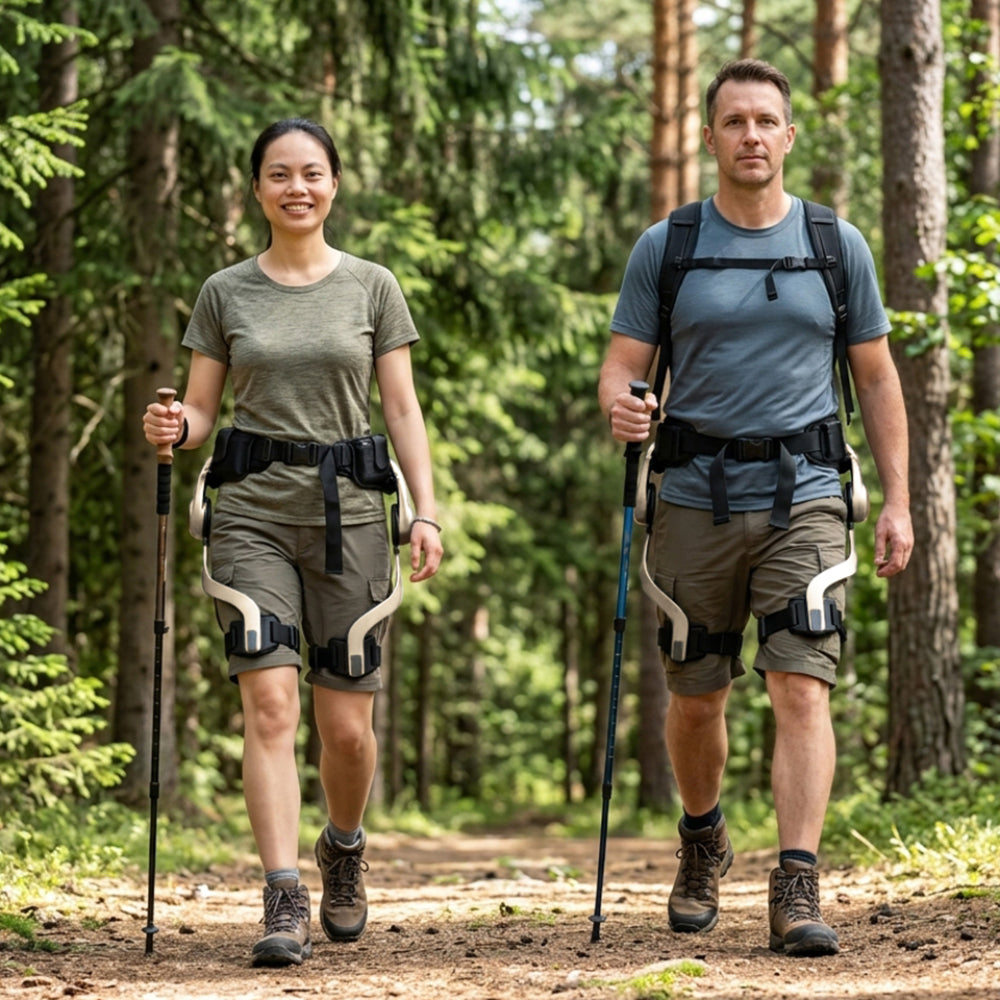
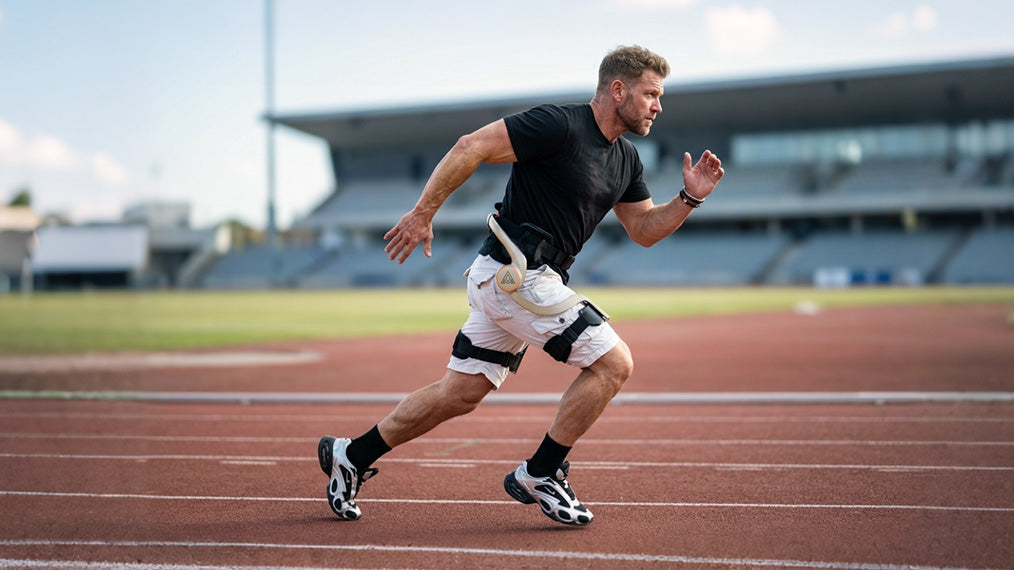
Most training tools only address one side of that problem. Shoes cushion. Gyms isolate. Neither adapts to the ground beneath you or the fatigue building in your legs. That is where the CYBERGEN Cadens Exoskeleton comes in. Not as a labour-saving device for the casual walker, but as an active exoskeleton built for people who genuinely enjoy pushing themselves. It pairs AI-driven intent prediction with a lightweight magnesium frame to deliver two distinct training outcomes: extended endurance on long efforts, and targeted resistance loading when you want every step to count as strength work.

Millisecond Intent Sensing: How Response Time and AI Algorithms Optimize Gait Dynamics
The foundation of any Addmotor exoskeleton is how quickly it reads changing ground. Trails are rarely uniform: one moment you are on packed fire trail, the next you are picking through sandstone steps or loose gravel. A shoe cannot adjust to that. Cadens can, through a three-stage Sense-Interpret-Assist pipeline:
- Sense: multi-axis IMUs and joint-angle sensors sample gait phase, torso inclination and angular acceleration at high frequency.
- Interpret: an onboard algorithm identifies movement intent within a millisecond window before foot contact.
- Assist: torque output is planned ahead of the step, not after it.
The distinction matters. A system that reacts after the step has already begun will always trail the movement; a system that predicts intent stays ahead of it. That is the difference between assistance you feel working with you and hardware that drags behind you. For running exoskeleton and hiking exoskeleton scenarios, that timing keeps power delivery synchronised with the gait cycle, preserving rhythm across mixed surfaces. Because the system reads intent and adjusts automatically, there is no handheld controller to break your rhythm mid-stride — your hands stay free and your cadence stays uninterrupted.

Dual-Mode Kinetics: Balancing Endurance Extension and Targeted Muscle Conditioning
The CYBERGEN Cadens Exoskeleton runs on a dual-motor setup with a peak output of 1,000W and 40 N·m of torque, delivering up to 45% assistance. That is power headroom most wearable devices simply do not have, and it is what allows one device to serve two opposite training goals:
- Smart Adaptive Mode — endurance extension. The motors work as a dynamic endurance aid. On long efforts or sustained climbs, they reduce the continuous load on the quadriceps so you can hold output near your aerobic threshold longer, extending both session duration and distance covered. You finish the route instead of fading before it.
- Fitness Mode — resistance loading. The same dual-motor platform, under algorithm instruction, outputs resistance instead of assistance, turning the device into a strength enhancing exoskeleton. Everyday walking and easy jogging become loaded movement that recruits the glutes and hamstrings, driving higher calorie expenditure and lower-body conditioning without gym equipment. A normal walk stops being a warm-up and starts being a workout.
The same logic holds indoors. On a treadmill or a walking pad, Fitness Mode turns a flat, controlled session into progressive resistance work, with the added benefit that pace and incline are already fixed by the machine. Because the resistance is timed to the millisecond-level intent recognition described above, it lands within the muscle's optimal power window rather than lagging behind the step. The dual-motor architecture also provides the power headroom that high-intensity interval work demands — sprint efforts and sharp intervals do not outrun the hardware.

Biomechanical Continuity: Lightweight Magnesium Alloy & Long-Range Power Architecture
A lightweight exoskeleton earns that label through distribution, not just weight. At 2.0 kg net, the high-strength magnesium alloy frame concentrates mass at the hip drive unit, and the system preserves 184° of joint freedom of movement, so stride length and hip extension stay unrestricted whether the unit is assisting or resisting. The lower-body kinetic chain moves naturally instead of fighting the hardware — a detail that matters on technical trails where foot placement is constantly changing. The device disappears into your movement rather than announcing itself with every step.
Speed performance follows the same principle: assistance reaches up to 22 km/h, covering faster efforts and high-intensity intervals without the unit becoming a limiting factor. Endurance comes from two removable 3,000mAh batteries used alternately, together covering up to 24 km depending on mode and terrain — enough for a full trail running session or a half-day mountain hike. When the first battery runs flat, you release it from the hip drive unit, click in the charged spare, and carry on toward the full 24 km without touching your App settings. That straightforward swap is what makes the Cadens practical for longer days out. With an IP54 dust and water resistance rating, these outdoor exoskeletons hold up against coastal humidity, sudden downpours and dusty inland conditions alike — so weather shortens the plan, not the training.
On-Device Control First, App When You Want More
A training device is only as reliable as its worst-case scenario. That is why the Cadens puts physical controls on the hardware itself. Buttons on both sides of the unit let you power on, switch modes and adjust assistance levels directly — no smartphone, no app, no connection required. The companion Addmotor App is there when you want more: custom advanced settings and detailed activity data, plus over-the-air updates that keep refining torque curves as your gait data accumulates. Basic control never depends on a phone, which is why this outdoor fitness exoskeleton device stays fully operational in remote areas with no network coverage, when your phone battery dies, or when you simply want to start moving without opening an app.
When you do connect, ordinary walking becomes quantifiable, progressive overload: every session a measurable training unit rather than an unlogged walk. That works as well on a local trail as it does on a treadmill at home, where the fixed pace and controlled environment make it easier to compare sessions week to week and confirm that resistance load is actually progressing. Training stops being guesswork and becomes a record you can build on.
Conclusion
The CYBERGEN Cadens Exoskeleton treats terrain as a training surface rather than an obstacle — outdoors on the trail, or indoors on a treadmill when the weather keeps you in. Millisecond intent recognition drives the control loop, a dual-mode motor platform covers both endurance extension and resistance loading, and the hip-weighted 2.0 kg magnesium frame keeps biomechanics intact. Physical buttons keep it running when the phone does not. Shoes cushion. Gyms isolate. This adapts. It is not a shortcut. It is a way to make every step count as training.
Explore the full technical specifications on the CYBERGEN Cadens Exoskeleton Product Page, and see how the Addmotor exoskeleton platform fits into a structured outdoor training plan alongside our Outdoor Exploration guides.



Leave a comment
This site is protected by hCaptcha and the hCaptcha Privacy Policy and Terms of Service apply.